

Systemic change
Public Policy

Marked by progress
Inclusion Policy in the Cayman Islands
Public policy plays a critical role in shaping whether disabled people can fully participate in Caymanian society. Over the past two decades, the Cayman Islands has made important progress through legislation, national policies, and frameworks aimed at protecting the rights and dignity of persons with disabilities.
However, policy alone is not enough. True inclusion depends on how laws are implemented, enforced, funded, and understood, and whether they reflect a commitment to the Social Model of Disability rather than outdated, segregating approaches.
Inclusion Cayman collaborates with stakeholder to:
- Advocate for stronger, rights-based inclusion policies
- Promote alignment with international best practice
- Amplify the voices and lived experiences of disabled people
- Push for systemic change rather than isolated solutions.

Legal frameworks
Key Laws and Policies Governing Inclusion
Several laws and policies form the foundation of disability and inclusion policy in the Cayman Islands, including:
The Persons with Disabilities Act (2014)
Establishes rights, protections, and responsibilities related to accessibility, non-discrimination, and participation.
The National Policy on Disability (2013)
Provides a framework for promoting inclusion, equal opportunity, and access across government services.
The Building Code (Accessibility Provisions)
Includes requirements intended to improve physical accessibility in public buildings and spaces.
Education and Employment-Related Policies
Various policies govern access to education, accommodations, and employment protections for disabled individuals.
Together, these instruments represent an important foundation — but they must be consistently applied and regularly updated to reflect best practice and lived experience.
Applying inclusive practice
Inclusion Policy in Practice
Policy becomes meaningful when it translates into real-world change. Examples of inclusion policy in practice can include:
- Accessible public buildings and transport
- Inclusive education models that support disabled students in mainstream classrooms
- Workplace accommodations that enable disabled people to work and advance
- Government services that provide information in accessible formats
- Consultation with disabled people in policy development and decision-making
Where inclusion is implemented well, disabled people are able to participate with dignity, independence, and choice.

The way forward
Where More Work Is Needed
International Commitments
The Cayman Islands has not yet ratified the United Nations Convention on the Rights of Persons with Disabilities (CRPD). Ratification would signal a clear commitment to international human rights standards and provide a framework for accountability and systemic change.
From Segregation to Inclusion
Too often, we continue to create separate spaces for disabled people — separate schools, programmes, or services — rather than ensuring that mainstream systems are designed to include everyone from the outset. Segregation, even when well-intentioned, reinforces exclusion and limits opportunity.
Implementation and Enforcement
Laws and policies are only effective if they are:
- Properly funded
- Actively enforced
- Understood by service providers
- Informed by disabled people themselves
Cultural and Attitudinal Barriers
Stigma, low expectations, and lack of awareness continue to undermine inclusive policy. Changing laws without changing attitudes will not result in meaningful inclusion.
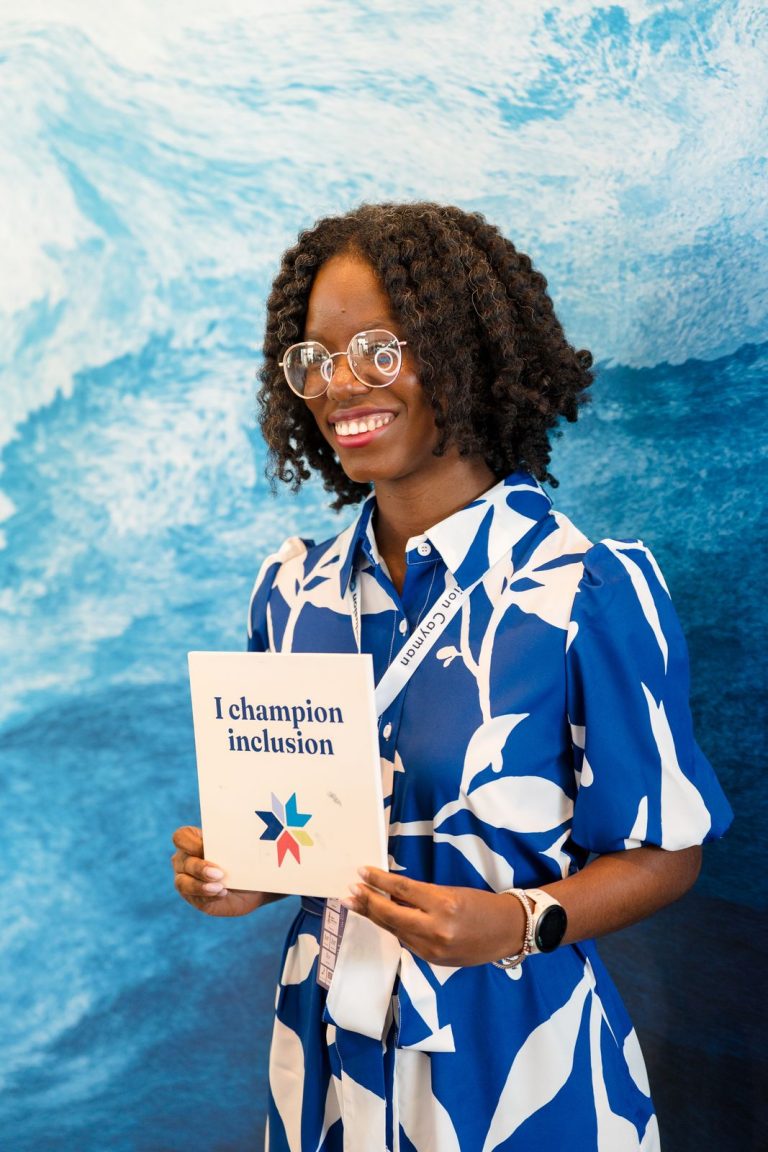
Be part of the change
Creating an inclusive Cayman Islands takes all of us: individuals, families, organisations, and communities working together.
Whether you want to learn more, share your voice, volunteer your time, or support inclusive change, there’s a place for you at Inclusion Cayman.